
Whoa! This is one of those tech shifts that sneaks up on you. I remember the first time I tapped a hardware card and thought, huh—this actually feels different. Short, tangible, and almost human-sized compared with the chunky devices we’ve carried for years. My instinct said: likely safer, but also maybe too simple to be true.
Okay, so check this out—smart-card hardware wallets that use NFC are not gimmicks. They pack secure elements, tamper resistance, and often a streamlined UX that makes key hygiene less painful. On the surface they look like credit cards, but under the hood they behave like dedicated cold storage with a modern convenience layer. Initially I thought they were just another convenience play, but then I started testing them in real-world pockets, bags, and briefcases and that changed my mind.
Here’s what bugs me about traditional hardware wallets. They are secure, sure. But they can be bulky, fiddly, and intimidating to new users who already feel lost. The learning curve keeps people on exchanges or custodial solutions, which is a very very important security failure vector. NFC smart-cards lower that barrier without blowing the security model apart—if implemented right, though actually, wait—let me rephrase that: the implementation details matter more than the marketing.
Short sentence. NFC is about proximity. It removes physical connectors and the attack surface that comes with them. That means fewer points of failure when you’re signing transactions in public or on a cafe table, though there are trade-offs to consider in threat modeling and user behavior. On one hand this is brilliant for everyday usability; on the other hand you can’t ignore the implications of wireless communication even if it’s near-field and salted with crypto protections.
Seriously? Yes. There are scenarios where NFC is ideal. Think quick mobile payments, multi-account management on phones, and travel-friendly cold storage. But I’ll be honest: if you put the card in your back pocket and forget about it, that human factor is still the weak link. My real test was durability—cards survive keys and wallets far better than tiny dongles that like to get crushed or left in the couch.
Let me walk you through the tech at a non-nerd level. The card itself houses a secure element—a dedicated chip with isolated execution for private keys. That element signs transactions without ever exposing the private key to the phone or computer, which is the point of “cold”. The phone only gets a signed transaction blob back, which it broadcasts to the network, and the user never directly handles the secret. Initially I thought hardware wallets were all the same, though actually the secure element’s certification and the firmware update model really separate the good from the meh.
Hmm… some questions pop up naturally. Who owns the firmware? Can the card update silently? Is the supply chain verifiable? These matter because a secure element is only as trustworthy as the code it runs. My instinct often flagged companies that skimp on transparency. That said, there are serious vendors trying to do this right, and I’ve been favoring hardware that publishes audits and has a clear recovery story.
Short and blunt. Recovery is everything. If you lose your device, can you still access funds? Good cards support seed phrase recovery or a delegated recovery flow, though the mechanisms vary. Some push a custodial recovery as convenience, which I’m not crazy about. I’m biased, but I prefer models that let you reconstruct keys without trusting a third party; the trade-off is complexity, and the industry still hasn’t solved UX here perfectly.
Check this out—one of my go-to hands-on tools in testing has been the Tangem card. I keep one in my wallet for day-to-day experiments and it’s been incredibly resilient. The tap-and-sign workflow is surprisingly fast, and the physical form factor triggers less anxiety among friends who are new to self-custody. For those curious, see tangem for a concise look at a commercial implementation that balances form, function, and security well—but remember, vendor choice should be based on threat model, not just shiny packaging.
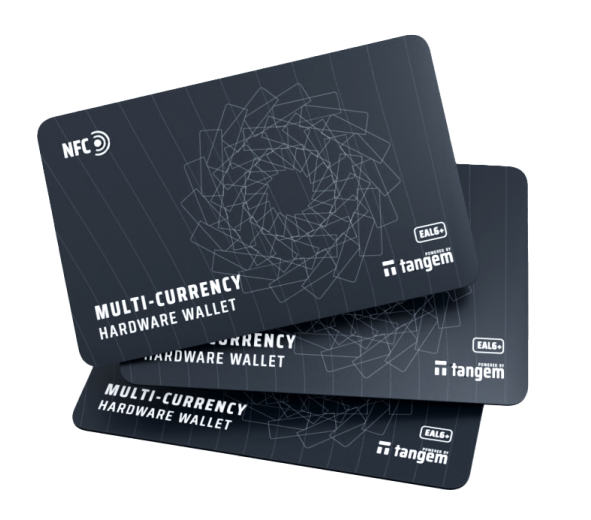
Threat Modeling: Where NFC Cards Shine and Where They Stutter
Short note. NFC’s range is tiny. That’s a security win. It means attackers can’t just reach over and snatch signals from across the room in normal setups. But proximity doesn’t equal invulnerability; relay attacks and malicious proximity devices exist, especially in crowded environments. So the best practice is to combine NFC with additional checks—PINs, biometric confirmations, and transaction previews that show exact amounts and recipient addresses before signing. On the other hand, this layered approach does add UX friction, so designers must be thoughtful.
Let me be concrete: if you’re at a conference, a bad actor could attempt to induce a signing request if they have temporary proximity. However, without user approval—usually a tap or a PIN entry—the card won’t sign. That user interaction is your firewall. My advice is to treat any transaction request the same as handing cash to someone—slow down and confirm, especially for unfamiliar addresses. It’s human behavior that usually degrades security, not the tech itself.
Okay, a quick aside—regulatory pressure will shape hardware. Some governments are already asking for backdoor-friendly models or key escrow in other domains. For now most reputable card vendors resist that, but it’s worth paying attention to company jurisdiction, corporate governance, and legal exposure. You might be surprised how much legal posture affects long-term trust in hardware products.
I’ve seen very bad recovery flows. They pretend to be seamless, but they hide cloneable backups or require trusting centralized servers. If the vendor’s recovery involves them holding a backup, then you’re effectively using a custodian. Learn the difference. A truly secure product will let you recreate your seed with offline methods or a personally stored backup. That’s not sexy, and it terrifies many users, but it’s the point of self-sovereignty.
One more technical bit. Secure elements often carry certifications like Common Criteria or CC EAL levels. These certifications mean something, though they’re not magic. They raise the bar for certain classes of attacks. But firmware bugs, supply-chain tampering, or developer mistakes can still break things. So read the security docs, scan for audits, and ask for transparency. Companies that shy away from scrutiny are the ones that worry me most.
My method for vetting a card is messy and human. I look at the company’s transparency, the product’s recovery model, user experience, and long-term firmware strategy. I then stress-test the device for scratches, subsidence, and real-world usability over months. It sounds excessive, and maybe it is, but that’s the sort of hands-on evaluation that separates good picks from overhyped ones. Honestly, somethin’ about a product that survives my backpack is a good sign.
Here are practical recommendations for users who want to move from custodial platforms to NFC hardware cards. First: start small—transfer a minor amount and perform repeated recoveries on a spare device so you know the process by heart. Second: always record your recovery seed in multiple secure locations and consider a geographically distributed strategy. Third: use cards with a strong PIN and optional biometric gating if you want extra friction against opportunistic theft. And fourth: keep firmware updated, but verify updates via published changelogs and ideally independent audits.
Short, direct. Don’t mix devices. Using the same phone for signing and for malware testing is dumb. That matters because if your phone is compromised, the signed transaction could be manipulated before it broadcasts—though the card’s signature still protects the key, the data path can introduce bad inputs. So maintain device hygiene: limit app installs, avoid sketchy APKs, and keep your mobile OS patched. Again, human behavior is often the weak link, not the chip.
Something else that bugs me: social engineering. Attackers will try to trick you into approving transactions for bogus invoices or fake charity. Train yourself to verify addresses, amounts, and purpose. And if a transaction looks odd, pause, call the contact, or re-verify on a different channel. This simple habit prevents a large share of avoidable losses—it’s not glamorous, but it works.
On a future-looking note, NFC cards could be integrated with multisig flows, hardware-backed access controls, and institutional custody hybrids that split responsibilities. That would mix the best of self-custody with professional-grade redundancy. I saw prototypes where one card signs day-to-day micropayments while a second, more secure vault authorizes large transfers. That model feels promising for small businesses and power users who want balanced risk management without total reliance on third parties.
FAQ
Is an NFC smart-card wallet as secure as a traditional hardware dongle?
Short answer: mostly yes, when made properly. Both rely on secure elements that keep private keys isolated. The differences come down to certifications, firmware practices, and recovery design—so evaluate those rather than form factor alone.
What happens if I lose the card?
If you have a solid recovery seed and followed best practices, you can restore funds to a new device. If you relied on vendor custodial recovery, then you may be tied to their policies. My rule: assume you will lose it and plan accordingly—redundancy beats regret.
Can NFC be intercepted?
It’s extremely limited by range, but relay attacks are theoretically possible. That’s why user approvals, PINs, and transaction previews are critical. Treat NFC like short-range wireless—very secure, but not infallible.
I’m not 100% sure about every new vendor on the market, and I admit I have favorites. But overall the trend feels right: people need safer, easier, and more portable ways to hold crypto without giving up sovereignty. NFC smart-cards—when designed with transparency and sane recovery—hit that sweet spot for many users. They’re not perfect, though they’re a lot closer to what mainstream users will actually use compared to fiddly dongles.
So here’s my closing thought, quick and a little raw. If you’re ready to step up from custodial platforms, get a card, test it, and train yourself to be cautious. The tech helps, but you still have to do the human part. Try one that publishes audits and supports true self-recovery, and remember: security is a practice, not a product. Somethin’ like that never goes out of style…